Where the Light Falls

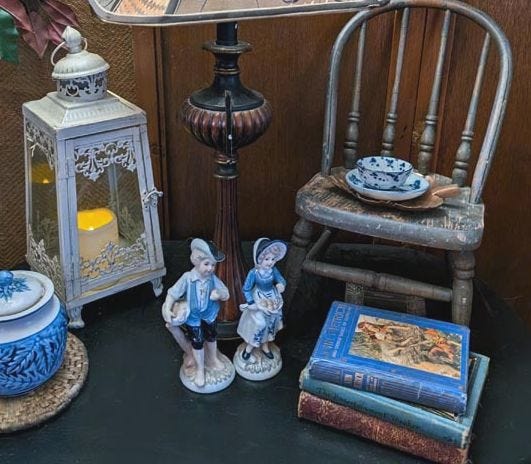
I’ve had this little gray chair for as long as I can remember. It was given to my grandmother when she was a child, and years later she passed it down to me. That simple act turned it into more than a chair—it became a keeper of stories, a small and steady witness to generations of quiet living. Its worn edges and softened paint feel like proof of the hands and hearts that have rested there before mine.
In front of it sits a small stack of old books, among them John Dietrich and Other Tales of Germany, one of the treasures I found at Nevermore Used Books many years ago. I still remember the feeling of discovering it, as though I had rescued a fragment of another time. Old books have a presence about them—they don’t demand attention, but they hum gently with memory.
Nearby rests a piece of vintage Delft porcelain, delicately painted with a boy and girl picking grapes. Delft is also the birthplace of Johannes Vermeer, one of the great Dutch Masters and, to me, one of the most extraordinary painters of light. I have long admired the way he captures stillness—not as emptiness, but as something alive and luminous.
In many of Vermeer’s masterpieces, books appear quietly within the composition. They are rarely the focal point, yet they ground the scene with meaning and symbolism. In The Art of Painting, Clio holds a history book. In The Geographer, an open folio invites study and discovery. In The Allegory of Faith, a book rests upon the table. These volumes are not ornamental; they suggest thought, inquiry, and the unseen interior life of the figures who inhabit his rooms.
Every so often, I find myself wandering through the Vermeer interactive catalogue, lingering over details as if I might step through the canvas. A few years ago, I discovered there had even been a reality television series where artists competed to paint Vermeer’s “lost masterpieces.” What a delight that must have been—to watch modern painters attempt to recreate that gentle radiance.
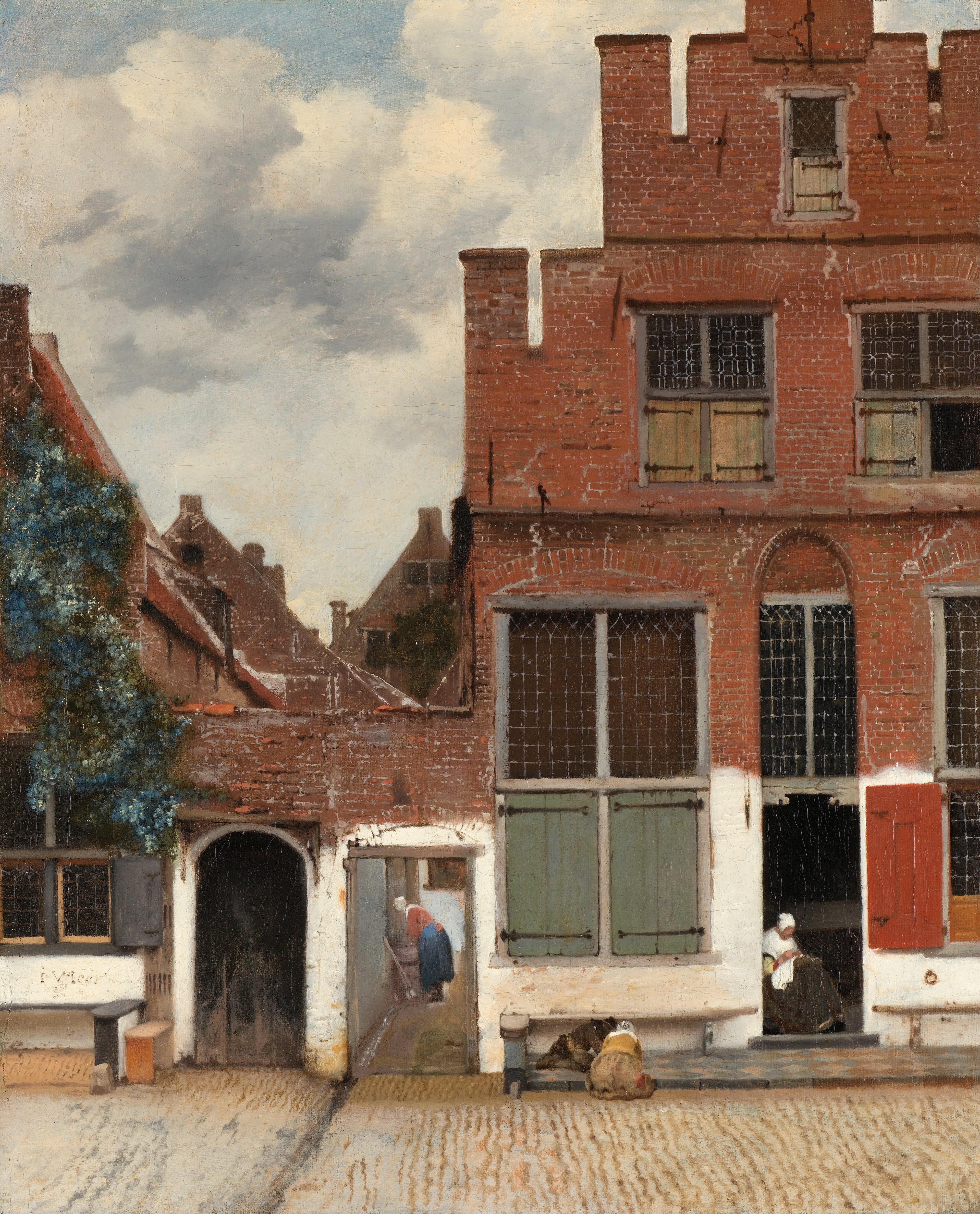
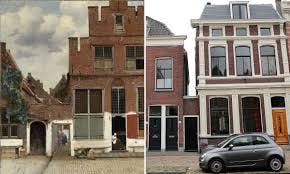
One of my favorite works remains The Little Street (c. 1657–1658). I am always moved by its intimacy: a woman seated in a doorway, children playing just beyond her, an ordinary street bathed in quiet light. Nothing dramatic, nothing grand—just a fleeting moment of everyday life made eternal.
Perhaps that is why this small gray chair, these timeworn books, and that Delft porcelain feel so intertwined in my mind. They are simple objects, yet they carry history, artistry, and memory within them. Like a Vermeer painting, they remind me that beauty often lives in the everyday—that light falls softly on the ordinary, and if we are paying attention, we can see it.
Johannes Vermeer’s The Little Street challenges perception through his meticulous technique, turning an ordinary Dutch alleyway into a richly textured, intimate scene. His precise handling of paint captures the tactile quality of worn brick, sunlit plaster, and repaired wood, creating a tangible sense of atmosphere. Subtle shifts of light and shadow enhance depth, drawing viewers into the quiet rhythms of domestic life and revealing beauty in the mundane through extraordinary attention to material detail.
The Little Street by Johannes Vermeer (c. 1657–1658)