
Timeless Treasures: The Enduring Charm of Crocks

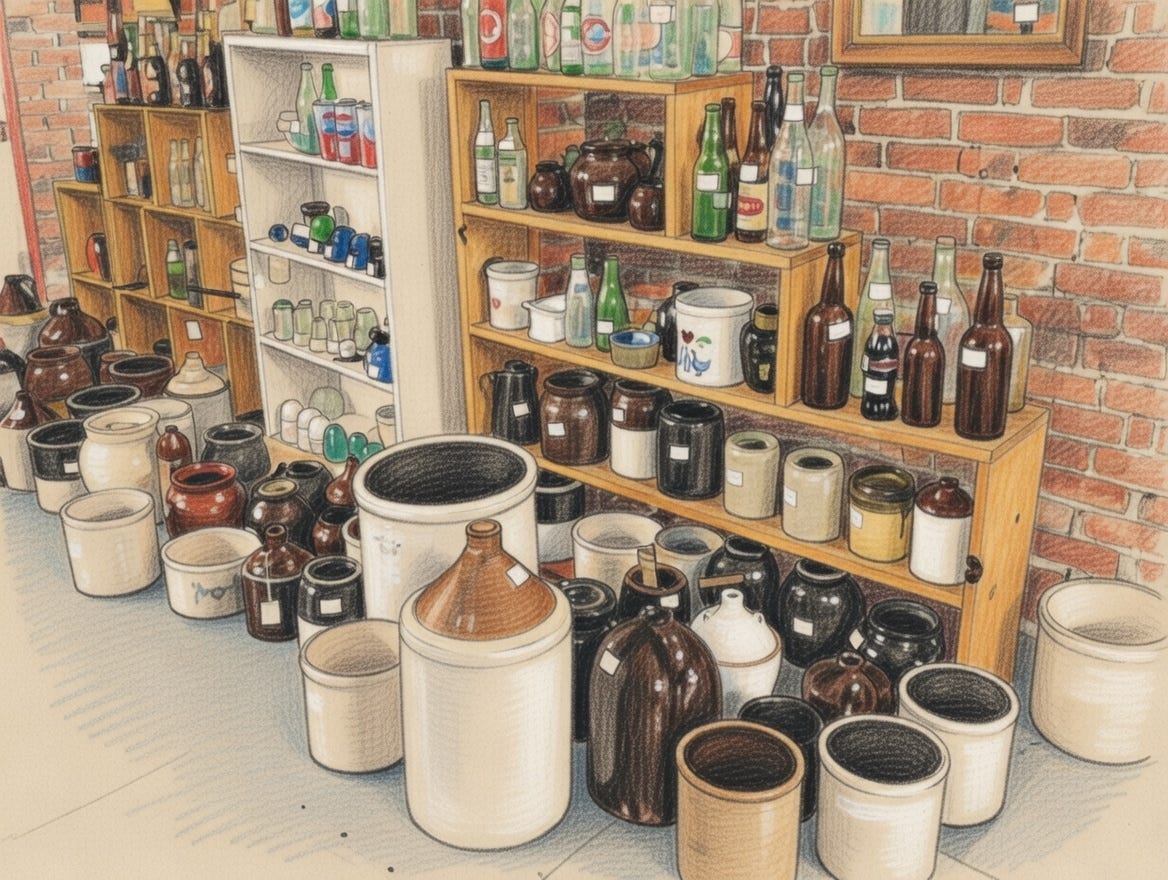
When I showed my mom the photo I had taken at an Antique Mall a while back, she looked at it thoughtfully and remarked, “I bet those crocks were expensive. Those used to be the thing to live by.”
Her words stuck with me, as they seemed to capture not just the value of the crocks themselves, but the memories tied to them. I’ve always had a deep love for vintage items, and crocks are no exception. There’s something special about them—their craftsmanship, the history they hold, and the way they make you feel connected to the past.
Crocks are made from clay, fired in a kiln, and often finished with a salt glaze that gives them their distinct, earthy look. In days gone by, stoneware crocks were used for a wide variety of purposes—mainly for storing food, like pickles or preserves. One of the most iconic uses for these crocks, especially in my family’s history, was for fermenting sauerkraut. The process of making sauerkraut in a crock is something both practical and deeply rooted in tradition.
To make sauerkraut, you start with cabbage—usually the firm, hearty heads that are perfect for fermenting. The cabbage is shredded and mixed with salt, and then packed tightly into the crock, layer by layer. The salt draws out the moisture from the cabbage, which then forms its own brine. The key is to pack it tightly enough that the cabbage stays submerged under the brine, preventing air from getting in. Over time, as it ferments, it develops that familiar tangy flavor.
In the past, the crock would be covered with a cloth or a wooden lid, and sometimes stones or weights were used to press the cabbage down, ensuring it stayed immersed in its brine. The crock would be stored in a cool, dark place, often in a cellar or a basement, where the temperature was perfect for the fermentation process to take place. It would take anywhere from a few weeks to a couple of months for the cabbage to fully ferment, and when it was ready, the sauerkraut would be a prized addition to the table.
It’s amazing to think how these humble vessels played such an integral role in daily life, keeping food fresh and preserving flavors for the months ahead. My ancestors, in particular, used open crocks like the white one I photographed for fermenting sauerkraut. The process was simple but effective, and it carried with it the sense of self-sufficiency that was so important back then.
These days, some old crocks are used outside as planters, adding rustic charm to the garden with flowers like impatiens. In the winter months, they make their way back inside, where I clean them up and repurpose them as storage containers. Some hold kitchen towels, others hold rolling pins. Each time I use them, I’m reminded of their long history and the many hands that once depended on them.
One of my most treasured crocks is this pineapple-shaped one we picked up at a local garage sale. It’s become a handy holder for cooking tongs in my kitchen, and every time I reach for it, I’m filled with nostalgia. The simple act of using these vintage pieces gives them a new lease on life, and it’s a beautiful way to honor the past while making them practical for modern-day use.
Last year, I was fortunate enough to win a gift certificate in a raffle, and with it, I purchased a piece of stoneware artwork. The display of stoneware I bought now sits proudly in my home, alongside a set of battery-operated candles that illuminate its beauty. The soft, flickering light brings a sense of warmth and timelessness to the room. It’s amazing how even the simplest pieces can bring so much joy and meaning.
What I find most fascinating about these old crocks is how they’ve evolved from everyday kitchen essentials to highly sought-after collectibles. These days, you can find them at estate sales or in antique malls, sometimes as part of a curated collection like the one I photographed. They’ve gone from being utilitarian objects to objects of admiration and preservation.
I wonder, if you have any stoneware crocks or jugs, what do you use them for? Do you find new ways to repurpose them, or do they hold a particular place in your home as treasured antiques? It’s always interesting to hear how others find meaning in these timeless pieces.