
Scribbles in the Scroll

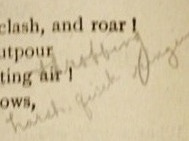
I cherish vintage books. There’s something almost sacred about them. Nearly every day, I pull one from my shelves, open its worn cover, and find traces of the lives that touched it before mine—lines underlined with urgency, notes pressed into the margins, thoughts captured in hurried pencil.
Sometimes I imagine the person who once held it. Perhaps they had an English teacher who insisted that at the end of each chapter they write careful bullet points, summarizing what they had learned. Maybe they were told to return to the book a week later and add personal reflections inside the cover, jotting down page numbers so they could revisit passages that moved them. What discipline. What devotion. And what a gift to stumble upon decades later.
A while back, I had the privilege of interviewing author Birgitta Hjalmarson about this very subject—about scribbling in books—and her words have stayed with me.
I told her how much I loved the scene of Anna reading Nietzsche and writing in the margins. “Do you believe many readers experience stories this way?” I asked.
She shared a memory of her mentor, Helga Wall, an inveterate scribbler. Helga had been a formidable editor, but when she wrote in the margins of a book, she was no longer editing. She was simply reading—responding not to the author, but to herself. Her notes were private conversations, evidence of a mind meeting another across the page.
Reading, Birgitta explained, is not passive. It demands as much of us as writing does. At first, we follow the author’s guidance—the who, the when, the where. But gradually something shifts. We begin to participate. We make connections. We remember. We anticipate. In a quiet way, we become creators too.
Scribbles are proof of that transformation.
We have all opened used books and found those marks—notes to self, sudden insights, emphatic protests, tender questions. They can be distracting, yes. But I can’t bring myself to condemn them. There is something deeply human about leaving a trace. Perhaps it is our small way of saying, like the rune stones of the Viking Age, I was here. I felt this. I mattered.
So the next time you open a book and find handwriting in its margins, pause for a moment. Consider the emotional journey of the reader who once held that same book in their hands. Imagine the questions they wrestled with, the sentences that stirred them, the thoughts that would not let them go.
“Scribbles in the Scroll” reminds us that reading is not solitary after all. It is a quiet exchange across time. Through those penciled notes and faded underlines, we are offered something rare and beautiful—the chance to connect with a soul from the past.