
Reading Room Weekly VIII
Where Time, Art, and Stories Come Together

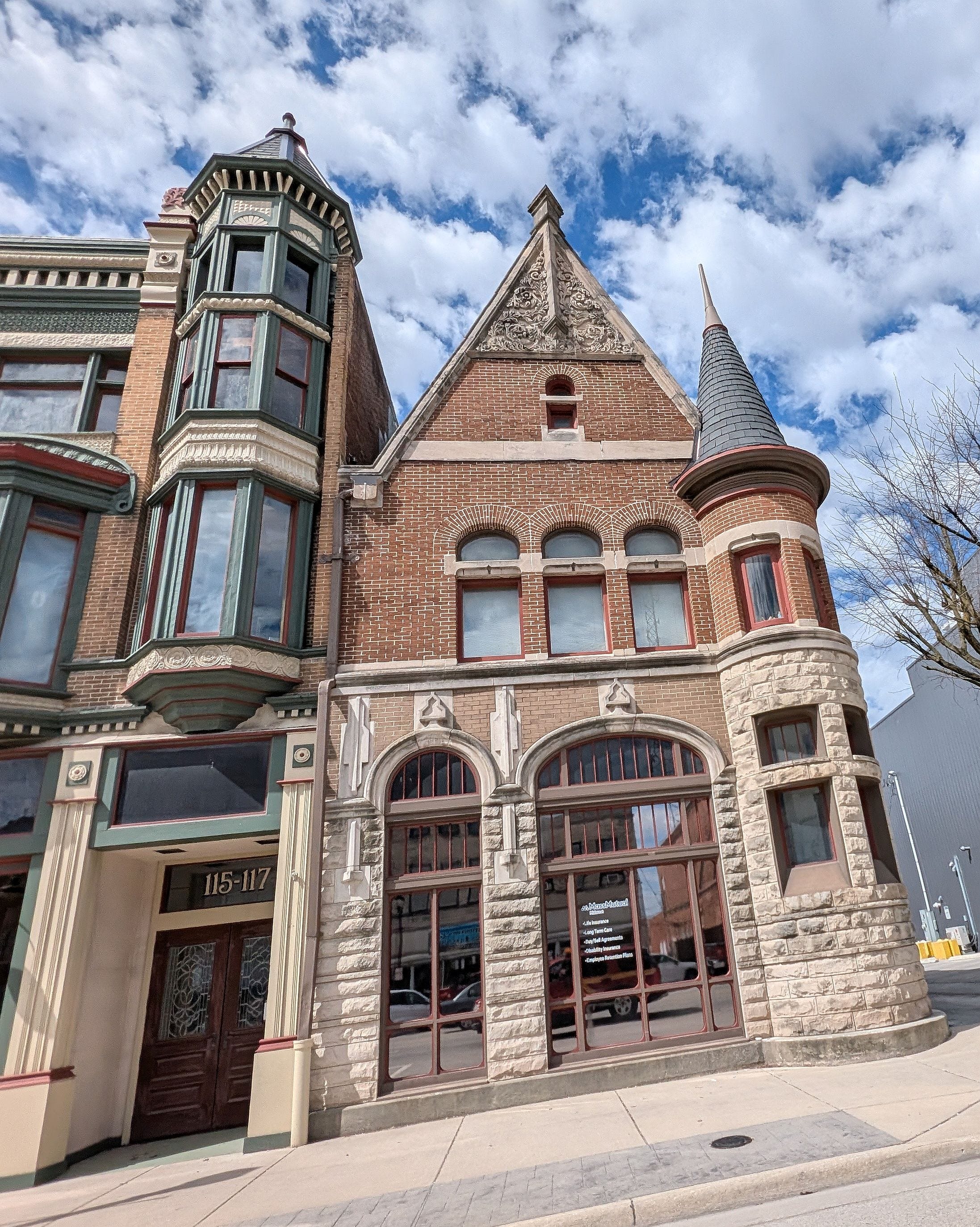
This week turned into an unexpected adventure. Early in the week, we set out on a drive. I thought I’d snap a few photos of old buildings, but it quickly became something more meaningful, a kind of slow, visual journey through history. We found ourselves stopping again and again: in front of beautiful 19th-century small-town storefronts that felt frozen in time, inside the shadow of old churches, and even beside a historic firehouse that looked like it had a hundred stories to tell. It wasn’t just about taking pictures - each building felt full of history, with its own personality and its own stories.
Outside of those little road trips, the week was fairly low-key but still creative. I worked, wrote a few articles, did some sketching here and there, and nursed a fever by reading Ernest Hemingway: A Life Story by Carlos Baker. I’ll admit—the book has been slow going. Not in a bad way, just one of those reads that asks you to take your time with it.
The weather, on the other hand, definitely didn’t take its time. We had some intense wind gusts roll through—up to 59 miles per hour. It brought back a not-so-great memory from the last time winds got that strong. So yeah, I was keeping a close eye (and ear) on things this time around.
On a more exciting note, something really amazing was happening far beyond our everyday lives. Artemis II launched on April Fools’ Day—but this wasn’t a joke. From what I understand, the plan to send four astronauts on a 10-day trip around the Moon is mostly to test how well the life-support systems work in deep space. Just the idea of humans exploring further into space again feels huge. It’s thrilling in a way that’s hard to even describe.
A few other highlights from early in the week stayed with me too. You can read about them below.
The Reading Life
1/ The Art
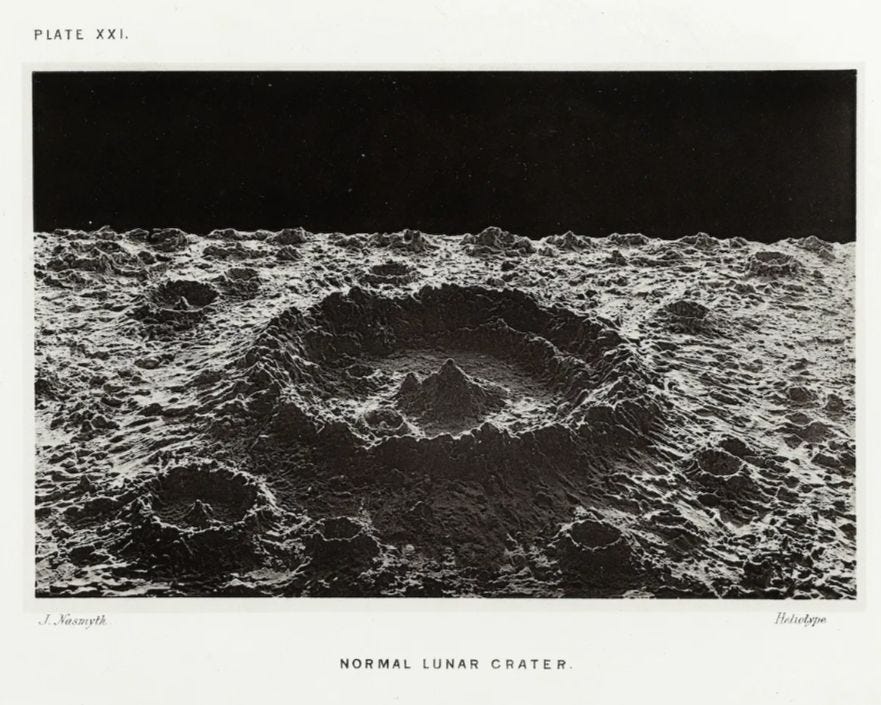
Since Artemis II was a topic of discussion this week, I spent some time looking over the work of James Nasmyth, a Scottish Engineer and amateur astronomer. Using a telescope he made himself, Nasmyth drew the moon’s rough surface, full of craters and mountains. He wanted to “faithfully show how light and shadow appear on the moon,” so he made plaster models from his drawings and took photos of them against black backgrounds in bright sunlight. Since cameras weren’t yet advanced enough to take clear pictures through a telescope, these drawings and models were an important step for capturing all the moon’s details. Nasmyth wrote The Moon: Considered as a Planet, a World, and a Satellite in 1874. Above is Nasmyth’s image of a normal lunar crater.
I also viewed some of Paul Calle’s work. Calle was selected to the NASA Art Program in 1962. One of his most iconic contributions was a stamp commemorating the first Moon landing, issued in 1969. It shows an astronaut stepping onto the lunar surface—simple, but powerful. It’s amazing how art can capture a moment that big and make it feel personal.

2/The Music
I was chatting with my husband about Artemis II, and it turned into a nostalgic detour to The Wild Wild West. I was telling my husband about watching reruns of the show and that I loved the character Artemus Gordon, played by Ross Martin. As Artemus, he was a brilliant scientist, inventor, and a master of disguise. I thought his inventions really gave the show its unique spark. The whole mix of Western, spy thriller, and science fiction felt so ahead of its time, and was what people call early “steampunk.” And of course, Robert Conrad as James West brought a rugged toughness that balanced everything out.
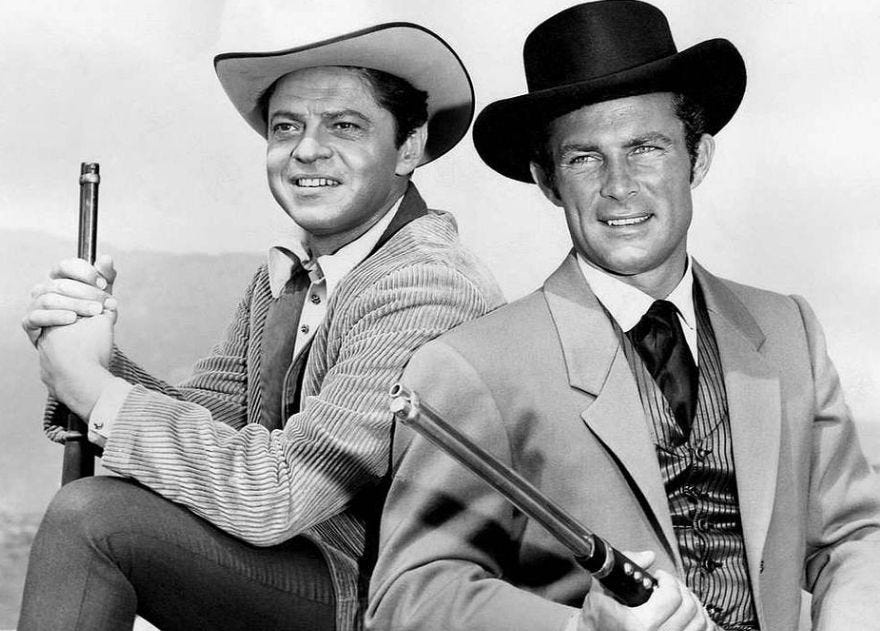
Anyway, we ended up smiling about it and listening to the theme song… which we both still love. Here’s a link to– The Wild, Wild West,” composed by Richard Markowitz and performed by the Florida Lakes Symphony.
3/The Literature
Also, I read some Rainer Maria Rilke.
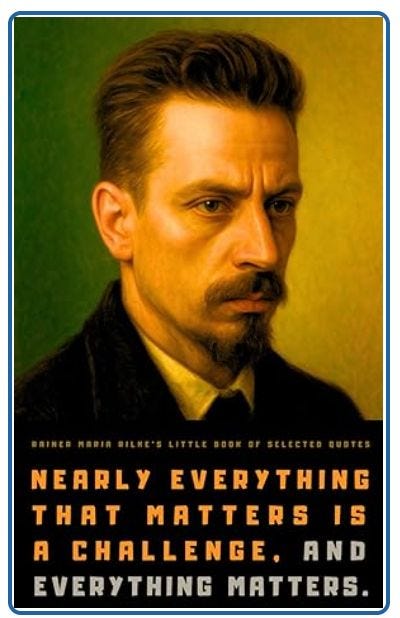
He writes about space, but not like regular science fiction or astronomy. He uses space more as a way to explore feelings and ideas. He talks about “inner space,” the personal, emotional space inside each person. If you want to check him out, try In April, translated by Jessie Lamont. It’s a quick read.
Shelf Aesthetics & Bookish Finds
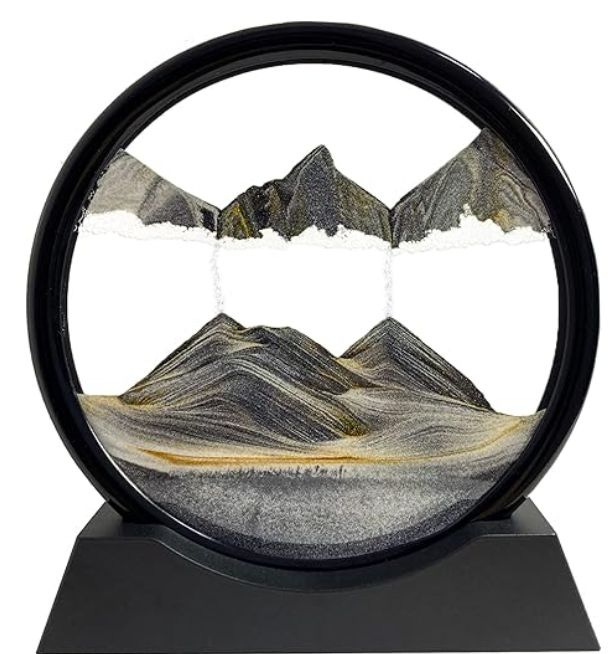
At Canaveral National Seashore, right near where rockets launch, visitors and artists can make cool, detailed pictures of the Artemis mission in the sand. These sand creations are temporary, but they leave a big impression. Moving Sandart makes a neat gift or a fun decoration for any bookshelf.
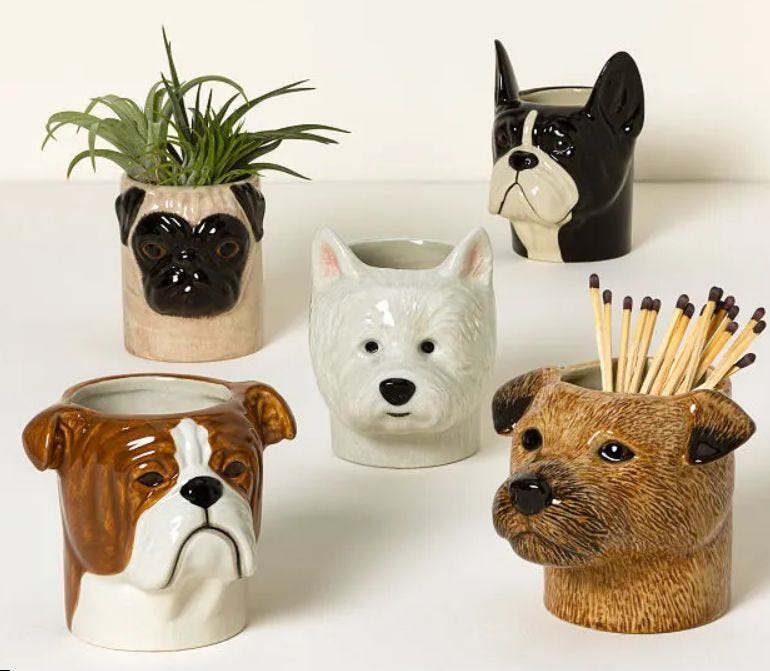
2. I love dogs, and dog breed planters are a charming way to bring personality to any bookcase. They come in various styles, from handcrafted ceramic to rustic wooden designs, and many are specifically sized for succulents, cacti, or small houseplants.
Journaling Topics or Book Club–Ready Discussion Questions
Journal Prompt: When life starts to feel overwhelming, what helps you regain your composure? Is it something active, like getting out and moving, or something quieter—like reading, sketching, or just sitting with your thoughts for a while?
All in all, it was one of those weeks that didn’t seem like it would be extraordinary at first, but the more I look back on it, the more it feels layered—with history, creativity, a little bit of tension from the weather, and even a glimpse of something bigger beyond Earth.
Wishing you a peaceful day and a week filled with gentle moments!
This publication is brought to you by Lori Shriver. If you liked this free newsletter, please press the ❤️ button below. Past, Palette & Prose is a reader-supported publication. To receive new posts and support my work, consider becoming a free or paid subscriber.
.